
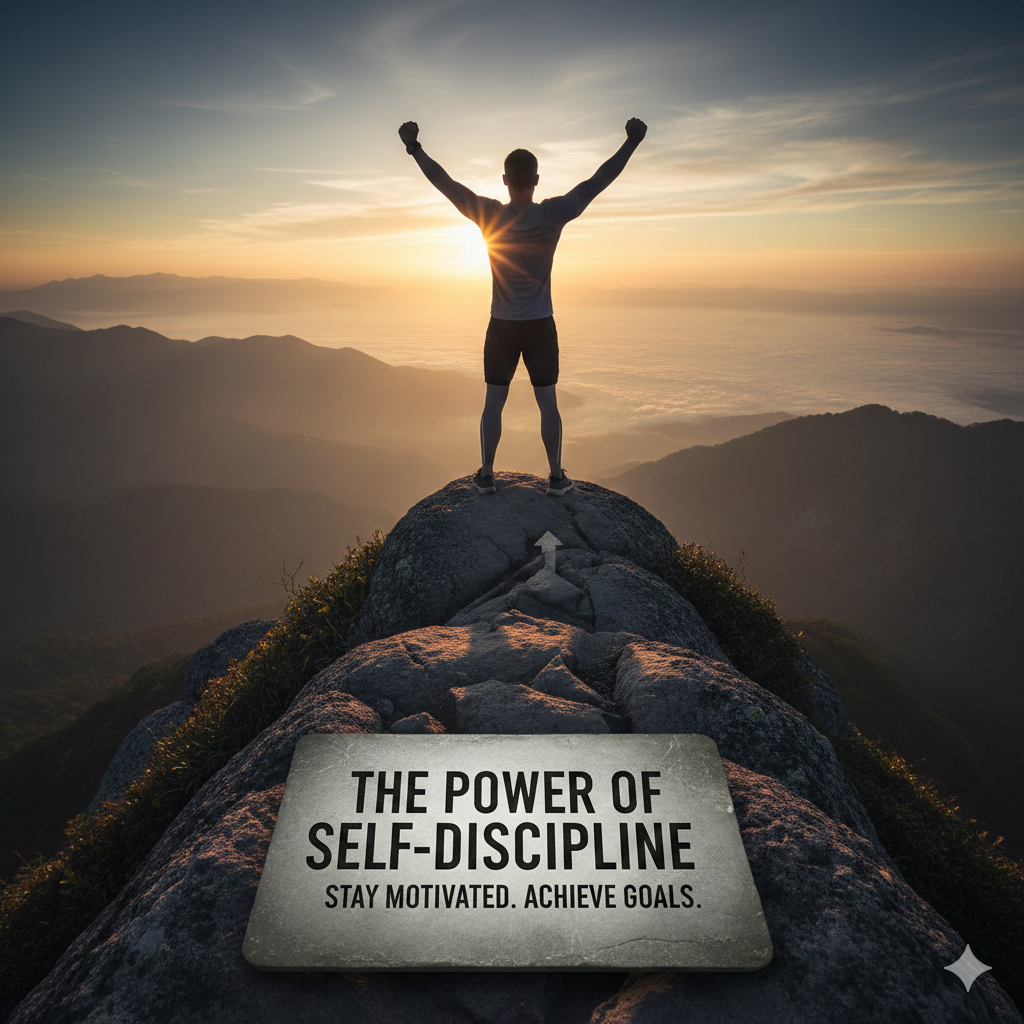
The Power of Self-Discipline: How to Stay Motivated and Achieve Your Goals
Why Motivation Alone Is Not Enough
Everyone wants to be motivated. We all search for motivation quotes, success stories, and productivity hacks. But the truth is simple: motivation comes and goes. What really separates successful people from the rest is self-discipline.
Self-discipline is the ability to stay focused, consistent, and committed even when motivation disappears. In this article, you will discover why self-discipline is more powerful than motivation, how to build it step by step, and how it can completely transform your mindset and your life.
What Is Self-Discipline?
Self-discipline means doing what needs to be done, even when you don’t feel like it. It is the skill that allows you to control your impulses, manage your time, and stay aligned with your long-term goals.
Unlike motivation, which depends on emotions, discipline is a habit. And the good news is: habits can be learned.
Motivation vs Self-Discipline: The Real Difference
Many people rely only on motivation, but this is a big mistake.
Motivation:
- Temporary
- Emotion-based
- Unreliable
- Comes and goes
Self-Discipline:
- Long-term
- Habit-based
- Reliable
- Works even on bad days
If you want real success, you must build discipline first, and let motivation become a bonus — not the foundation.
Why Self-Discipline Is the Key to Success
Here’s why self-discipline is one of the most important mindset skills you can develop:
1. Discipline Creates Consistency
Success is not about one big action. It’s about small actions repeated daily. Discipline makes consistency possible.
2. Discipline Builds Confidence
Every time you keep a promise to yourself, your self-confidence grows. You start trusting yourself more.
3. Discipline Reduces Stress
When you control your habits, your life becomes more organized. Less procrastination = less stress.
4. Discipline Leads to Freedom
Ironically, discipline gives you freedom — financial freedom, time freedom, and mental freedom.
Common Myths About Self-Discipline
❌ “I’m not a disciplined person”
✔️ Discipline is learned, not inherited.
❌ “I need motivation to start”
✔️ Action creates motivation, not the opposite.
❌ “Discipline means no fun”
✔️ Discipline allows you to enjoy life without guilt.
How to Build Self-Discipline Step by Step
1. Start With Clear Goals
You cannot stay disciplined if your goals are vague.
Instead of saying:
- “I want to be successful”
Say:
- “I want to publish 3 blog posts per week”
- “I want to wake up at 6 AM every day”
Clear goals create clear actions.
2. Focus on Systems, Not Willpower
Willpower is limited. Systems are powerful.
Examples of systems:
- Fixed work schedule
- Daily to-do list
- Phone-free mornings
- Habit trackers
Build systems that force discipline automatically.
3. Remove Distractions
Your environment controls your behavior more than your motivation.
- Delete useless apps
- Turn off notifications
- Work in a clean space
- Limit social media time
A disciplined environment creates a disciplined mind.
4. Use the “Non-Negotiable” Rule
Treat your goals like appointments you cannot cancel.
For example:
- Workout = non-negotiable
- Writing = non-negotiable
- Studying = non-negotiable
No excuses. No debates.
5. Build Momentum With Small Wins
Don’t try to change your life overnight.
Start small:
- 10 minutes of focus
- One page of writing
- One healthy habit
Small wins build momentum, and momentum builds discipline.
How Self-Discipline Improves Your Mindset
Self-discipline changes the way you think:
- You stop waiting for motivation
- You stop making excuses
- You take responsibility
- You become mentally stronger
Over time, your mindset shifts from “I hope” to “I decide”.
Daily Habits of Highly Disciplined People
Highly disciplined people usually:
- Wake up at the same time every day
- Plan their day in advance
- Focus on priorities
- Avoid instant gratification
- Reflect on their progress
These habits are simple — but powerful.
Discipline and Mental Health
Self-discipline is not about being harsh with yourself. It’s about self-respect.
Healthy discipline includes:
- Proper sleep
- Balanced work and rest
- Physical activity
- Mental clarity
True discipline supports mental health, not destroys it.
Final Thoughts: Discipline Is a Lifestyle
Motivation will inspire you, but self-discipline will transform you.
If you want real results in life, stop waiting to feel motivated. Start building discipline through small daily actions. Over time, your mindset will change, your confidence will grow, and your goals will become inevitable.
Remember:
Discipline today = Freedom tomorrow.
- self discipline
- motivation and mindset
- how to stay motivated
- build self discipline
- success mindset
- personal development
- productivity mindset
- discipline vs motivation
- mental strength
- daily habits for success